Sunday, May 31, 2015

Train of thought

Even more than the visual, which I had been eagerly anticipating, was the aural, which came as an unexpected surprise.

And it also came first.

It was the whistle that got to me, the vibrant, perfectly pitched and steam-released Hello, I'm Almost There. I could see a mile or so down the empty track, but had yet to see the Spirit of Roanoke, the Class J 611 steam locomotive and the only survivor of its kind from another, perhaps less complicated era.

But I knew she was coming. We all did. About 100 of us gathered around Lexington's reconstituted freight depot to watch our 65-year-old history steam by us, on it's return trip to Roanoke after a year of restoration at the Spencer shops.

Then, in a moment, she was in sight. First was the billowing black coal smoke above the trees. Then the incredibly bright engine light. And still there was the whistle with its promise of that mysteriously delightful Doppler effect — is it only train whistles that we hear that way?

When the engine finally reached us, bringing with her a symphony of sounds, including the unmistakable chugging rhythm of the boiler, pistons and drive wheels in 4-8-4 time, I almost missed her. I was busy scanning a view finder, one eye looking through a camera lens, the other on the train itself. Impossible multi-tasking. Wait. Wait. Wait. Now! Click.

The Class J 611 majestically steams through Lexington and on to Roanoke.
If I'd waited one more second, I might have had a better picture.

I thought I had time to snap one more, but by then I was being Dopplered. So I had to be content with the image that I caught.

As it was, Kim and I had seen her in Spencer a week ago, regally posing for her fans with less pressure on the photographer to make snap decisions. I have a pretty nice photo gallery going.

Later in the day, I started Googling various Web sites, including the NC Transportation Museum, trying to see how the locomotive was received at other towns along the way.

Apparently, fairly large crowds turned out all along the route. Thomasville was impressive. So was Lynchburg. The 611 pulled into Roanoke sometime around 5 p.m., taking something like nine hours to cover what an automobile can do in under three hours.

I know. Not a fair comparison. This trip was a sendoff excursion, after all.

And there's no romance in car travel. Not really.

But as the 611 showed, there is plenty of romance in history.

It was a special day.


Sunday, May 24, 2015

In training

For more than 30 years, I thought I had the best job in the world.

I mean, I was a sports writer, for crying out loud. I got to go to games. I got to meet famous athletes. I got to write about them. And I got paid for it. What could be better than that?

Driving a vintage train locomotive, perhaps?

"Do you have the best job in the world?" I asked the friendly man sitting at the controls of the gigantic Spirit of Roanoke, the absolutely beautiful art deco-ish Class J No. 611 Norfolk and Western Railway steam engine that just completed a year of restoration — its second such career overhaul — at the North Carolina Transportation Museum in Spencer.

I (center) am dwarfed by the magnificent elegance of Class J No. 611
"Yes," replied engineer Sandy Alexander without a second wasted in thought. "This is a great job."

No doubt. The No. 611 is one of only 14 Class J engines ever built by the Roanoke Shops, and is now the only surviving locomotive of its kind in the world. In the world, mind you.

And it's in Spencer.

But not for long.

On Saturday, May 30, the engine returns to the Virginia Museum of Transportation in Roanoke, VA, under its own power. That means something like the equivalent power of 5,100 horses will race through Lexington sometime between 7 a.m. and 8 a.m.

Turns out Sandy Alexander really does have the best job in the world.
The bullet-nosed 611 with the Tuscan stripe is 65 years old, just a year older than I am. (My claim to fame here is that I have yet to need one restoration, much less two). If you notice, I keep mentioning that the 611 is a "steam" engine, which might seem a bit odd given that the first generation of the more economical diesel engines were coming into vogue by 1950, when the 611 was built for $251,544. (The current restoration, by way of contrast — and inflation— cost somewhere between $750,000 and $1 million, much of it through donations).

But much of the trackage of the N&W ran through the Appalachian coal country of West Virginia, something that required both the incredible power and the anthracite patronage of the Class J vehicle. The N&W actually built two more Class J engines before going diesel in the late 1950s.

The Class J series is said by those who should know to be the most reliable and precisely engineered of steam locomotives. There must be something to be said for a 65-year-old locomotive that might still be the state of the art in steam rail travel. Back in its day, one of the Class J engines hauled 15 cars at 110 miles per hour on a test run on a straightaway in Pennsylvania.

What? You mean we had high-speed rail in the 1950s?

But by any measure, the Class J is a strikingly beautiful piece of machinery that somehow manages to exude subtle art, unbridled manifest destiny and wistful nostalgia all at once.

Yeah. Train engineer is the best job in the world.


Sunday, May 10, 2015

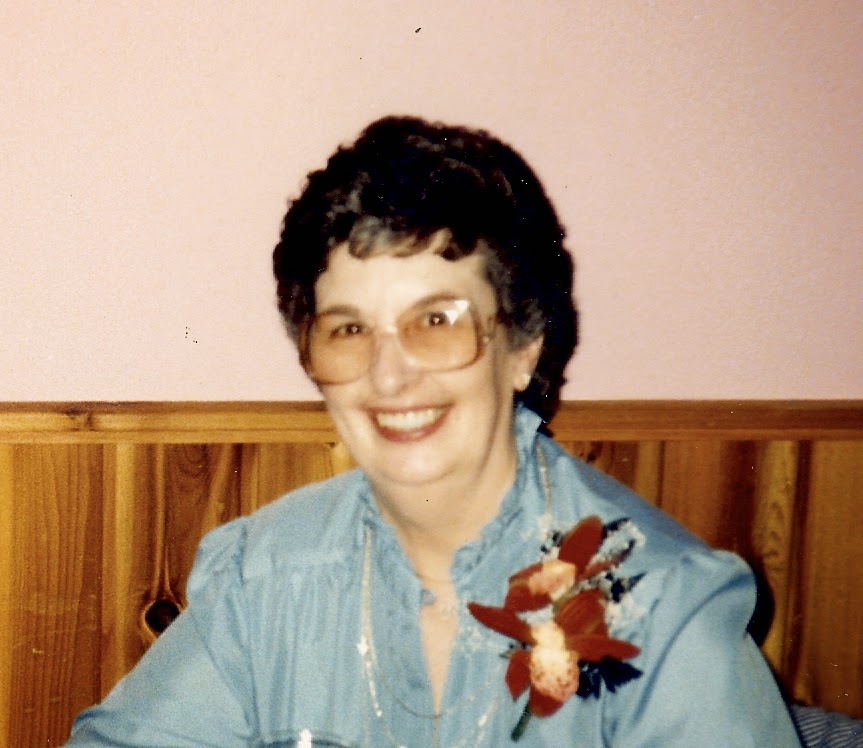
Mom

Well, Mom, I made it this far.

Are you surprised?

I think about this — and you — on Mother's Day. I wonder how many grown men (maybe even nearly elderly men) think about their mothers? I guess it happens. We are all children, after all.

I suspect you know this, but I'm 64 years old now. I retired as a sports writer in 2006 after 30 years with The Dispatch. I think you were always kind of proud of that for your oldest son: Steady job, doing what he liked — watching people play games and writing about it.

It turned out to be a successful career, and I think that success helped you to validate the job you did in parenting me. I always sensed your pride in me. That's something a child yearns to feel from his parents. It means I'm still trying to follow the values you set for me, still trying to make you proud of me. It's something sons do, I think. Or should.

Another thing that made you proud was the girl I married. I know you loved Kim, and you'll be pleased to know that, even now, she thinks of you nearly as often as I do. I like how you became friends.

I never saw this coming when Kim and I were dating, but it turns out that she's a pretty good cook. You knew that, of course, and you shared many of your recipes with her. To this day, I enjoy the bacon dressing on my German potato salad, or those labor-intensive Moravian sugar cakes during the Christmas holidays. Should I admit that when Kim makes something from your recipe book, I usually blurt out, "That's as good as Mom used to make!"

I can't believe it's been almost 24 years since you died. You'd be 87 years old now, a longevity that seems to have run through the Kessler family — except for you. You fought your cancer with a sublime, quiet courage, I thought, perhaps passing along by example another life lesson in dealing with adversity and events beyond your control.

You gave me life and the tools to nurture that life, so it seems inadequate to simply say "Thank you."

And, yet, it's also the highest, sincerest compliment I can offer.

Happy Mother's Day.


Sunday, April 26, 2015

It's a girl!

Kim couldn't resist.

Although she felt it was a bit too soon to have another cat in the house — we lost 14-year-old Do-Little to lymphoma in February —Kim was curious about Lora Tesh's Web site. Lora breeds Ragdolls (Soulmate Ragdolls, see here), those immanently lovable, blue-eyed cats that go limp in your arms when you hold them, thus their breed name.

And there she was — a three-month old kitten, Brie-Anna, who virtually shouted "Take me, I'm yours!"

Kim emailed me the picture from work. I, too, was smitten by the kitten and couldn't resist.

How can you resist this face? Welcome, Halo.
We called Lora, who lives in Salisbury, and asked if we could come over to her house to take a look. It's exactly the same thing we did 14 years ago, when Lora presented us with Do-Little.

We went over there that evening. I rang the doorbell, and after a short pause, Lora answered the door — with Brie-Anna in her arms.

Uh-oh. That was it and I knew it. We spent an hour there anyway, talking with Lora about the kitten, trying to talk ourselves out of caring for another cat.

After all, I'm 64 years old. A normal cat lifespan runs about 12-15 years, which means I could be 80 years old when this journey ends.

Another consideration was that after Do-Little passed, we were suddenly free. We could pick up and go anywhere we wanted without seeking a pet-sitter. No more vet bills. No more cat food bills.

And, yet. And, yet...

So, a few days later, we took the plunge. We were cat owners once more. There was never a doubt.

While we liked the name Brie-Anna, we wanted something that was more descriptive of her personality. We tossed around names like Karma, Shiloh and Ava, but Kim thought there was something angelic about this particular blue mitted cat with the white blaze on her nose. Hence, Halo.

OK, I thought. That's not bad. I don't know too many pets named Halo. And with my sportswriter sensibility, I could alter that name to Haley. We're good here.

I figure Halo will be my last cat, although we are considering a playmate for her. Maybe a Norwegian Forest Cat. If that happens, then I am looking at my last cats.

Right now, though, everything is focused on Halo. She's full bore, a handful running at 100 miles per hour, making us laugh, making us smile, making us happy.

Who couldn't resist?


Tuesday, April 21, 2015

Fredericksburg

I've been to Fredericksburg, VA, countless times to visit what remains of the Civil War battlefield there.

The first time I ever saw the field — the site of one of Robert E. Lee's most decisive victories because, in part, of the high ground he held there — came on the heels of a baseball trip to see the Baltimore Orioles play in newly constructed Camden Yards. I bet that was about 20 years ago.

My friend, who was driving and knew I had an interest in the Civil War, asked if I wanted to see the battlefield — we could detour off the Interstate for a few minutes before heading home to North Carolina.

It was an eye blink. I think I remember driving on the Sunken Road (you could back in those days) in front of Marye's (Ma-RHEEs) Heights, and I thought I was really something. I'd at least had heard of those iconic places, and now I had finally seen them.

Since then, I've been to the field dozens of times, tramping from one end to the other. I've always enjoyed my visits to Fredericksburg because the town is historic, it's visual, it's pedestrian friendly and there are some really great places to eat (like Carl's Ice Cream).

John Bloss came up this way to the Sunken Road and the stone wall.
 But this time was different. Now I was here with the Davidson County Civil War Round Table as part of our annual spring campaign. Since my last visit there a few years ago, I'd come to learn through my brother Scott's research that we had a direct descendant — John Bloss, a great, great grandfather — who fought for the 129th Pennsylvania (See here).

Suddenly, Fredericksburg took on a perspective I've never felt before despite the fact that I'd trod its history several times over. I walked over to the Innis House, just off the Sunken Road, and looked into town. This is the route from which Bloss would have come.


The Sunken Road with an original section of the stone wall (right center).
 I turned around and looked in front of me. There was the original portion of the famous stone wall. Behind it was Marye's Heights, defended, in part, by the 49th North Carolina of Ransom's Brigade — which included boys from Davidson County, and thus, some blood relatives of some of the guys I was traveling with.

Wow.

If that doesn't hit you upside the head, I don't know what will. I took a moment for myself, to reflect, to wonder, to tear up.

Bloss, of course, survives the war, although 139 of his regimental comrades apparently do not. It's something to contemplate.

The weekend also included a trip to Stratford Hall, where Lee was born, and to the National Museum of the Marine Corps in Quantico, VA., where I saw the flag that flew over Wake Island and the flag that flew over Iwo Jima, among other things.

Sometimes, history just falls into your lap. And sometimes, you have to look for it. Either way, there seems to be a treat in the end.


Sunday, April 12, 2015

Fort York

The first time I'd heard about York Hill was probably about 30 years ago. As a newly transplanted Yankee, I'd recently attended some gatherings of the Davidson County Civil War Round Table and had learned that a minor action had occurred there late in the war — April 12, 1865, to be exact —and was told that some pretty nice field works still existed.

So one day, on our way back home from a trip to Salisbury, my wife and I decided to stop and see what the fuss was about.

Keep in mind that I'd already seen preserved earthworks at places like Fredericksburg, Gettysburg, Petersburg and Richmond and was suitably awed and impressed.

But I was not quite prepared for what I found at York Hill. Although worn down some by the passage of time, the fortifications were in remarkably pristine condition. Almost 150 years later, you could see clearly defined rifle pits and artillery locations.

Leaf-covered earthworks at Fort York remain in remarkable condition.
What? In Davidson County? Holy smokes.

Why wasn't this area a state park?

The land back then was private property, probably in the hands of the Berry family, who made serious efforts to protect the land from looters and scavengers. Right now, The LandTrust for Central North Carolina is close to purchasing nearly 13 acres of Fort York, tying it in with the Wil-Cox bridge restoration project that spans the Yadkin River.

Fort York isn't all there anymore. The construction of Interstate 85 did more damage to the sprawling encampment than any Yankee incursion did 150 years ago. It is estimated that perhaps 50 percent of the original site still exists. But, oh, what a wonderful 50 percent it is.

The LandTrust opened the site for visitors yesterday and today, getting some spot-on history from guides Chris Watford, Lee Crook and Jimmy Myers (all who happen to be Round Table buddies of mine — see here). So Kim and I went back and took an impressive tour of the area, this time with subtitles.

The battle that occurred there (the fort was designed to protect the railroad bridge there, which was a vital asset to the crumbling Confederacy) was essentially an artillery barrage. The Union horse artillery, brought to the position (on heights near the current North Carolina Finishing Company property), withdrew after several hours of ineffective shelling, and the York Hill defenders claimed victory in one of the last battles of the war.

Ironically, the battle occurred several days after Robert E. Lee's surrender at Appomattox, but all that had done was take Lee's Army of Northern Virginia out of the war, thus preventing a hoped-for linkup with the remnants of Joseph Johnston's Army of Tennessee in the Raleigh area, fresh off its battle at Bentonville. The surrender was not between governments, but only with armies, one at a time.

I was pleasantly surprised by yesterday's turnout. The tour, which was free and lasted about an hour, saw our original group of 20 or so expand to about 50 or more tromping over the hill by the time we headed back to the car. To me, that's a good sign. Our history is alive and well.


Sunday, April 5, 2015

God's Acre

Kim and I contemplated — briefly — attending this year's Easter Sunrise Service at God's Acre Moravian Cemetery (also known as the Salem Moravian Graveyard) in Winston-Salem, but opted out because temperatures were in the low 30s, my age is in the mid 60s, and those two numbers just don't seem to work out very well together.

Besides, we've been to the ceremony on at last three other occasions. Attending the incredibly solemn, incredibly moving Easter Sunrise Service is a bucket list item that's already been checked off three times over. And we haven't yet ruled out attending future services.

But what we did do is go on Saturday, to stroll through the 244-year-old cemetery and observe another Moravian tradition: church and family members scrubbing clean their relatives' flat, white marble gravestones.

It's a minibucket list item, and seemingly no less reverential and focused than the sunrise service itself.

Flat white marble headstones dot the hillside at God's Ace Cemetery.
We brought a friend with us and within minutes, she told us that she was overwhelmed by her experience.

It's easy to see why while standing among the 7,000 sun-drenched and flowered headstones.

It's a time for contemplation and reflection. It's hard not to.

On this particular visit, among the hundreds of people cleaning and socializing, I unexpectedly bumped into a long-time acquaintance. She must be in her 90s now, a number that deserves reverence in its own right. The last time I saw her was in this very same scenario, maybe 10 years ago, while she was cleaning headstones.

One of those headstones belongs to her husband, a well-respected Moravian minister who died 21 years ago. One of her daughters, also a Moravian minister and a person I had once dated, recently announced her retirement. So it was a remarkable moment to have our lives intersect once more.

It was good to see you again, Marian.